
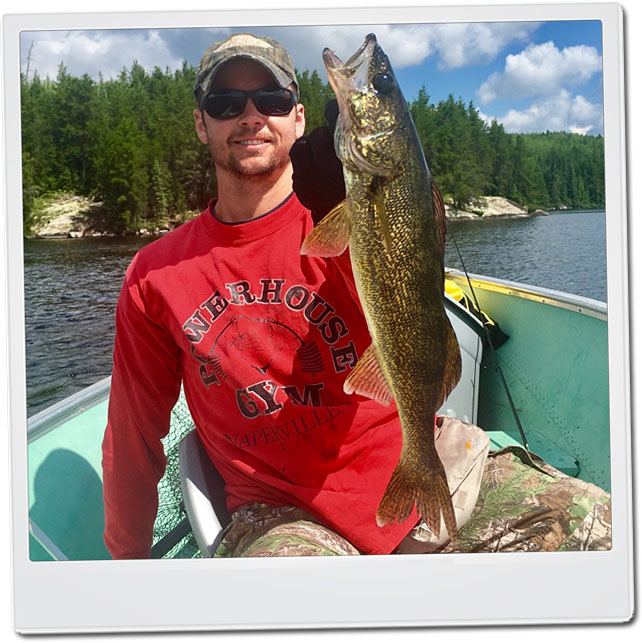
The next stop during the season is Outlet Bay. This area is a large basin with small shallow bays coming off the basin. Weed beds are productive; however, fishing down timber along the shore edges is also good. In fairly clear water (visibility of ca. 7 ft.) Walleye tend to like ambush spots. They love to hide in the weed beds, or slop weed and down lumber, where bait fish are easy prey. Because of the Muskie population, which love to eat them, Walleye prefer the relative safety of these areas!
When summer comes, Walleye are schooled up in the main basin, which is up to 70 ft deep in the deepest hole. They are also in Outlet Bay, Canyon Bay, and throughout the entire narrows area. Rock points, under water humps, break lines, down timber, and weed beds are all prime spots to look for Walleye. We have found that where the bait is present, there is also Walleye. Keep in mind that the bait will continue to go deeper, so we adapt in late summer, and throughout the fall season as well. By late September we will fish in at least 30 ft depth. In the fall, the fish become well patterned and bite during the daylight hours, instead of the low light hours earlier in the season.
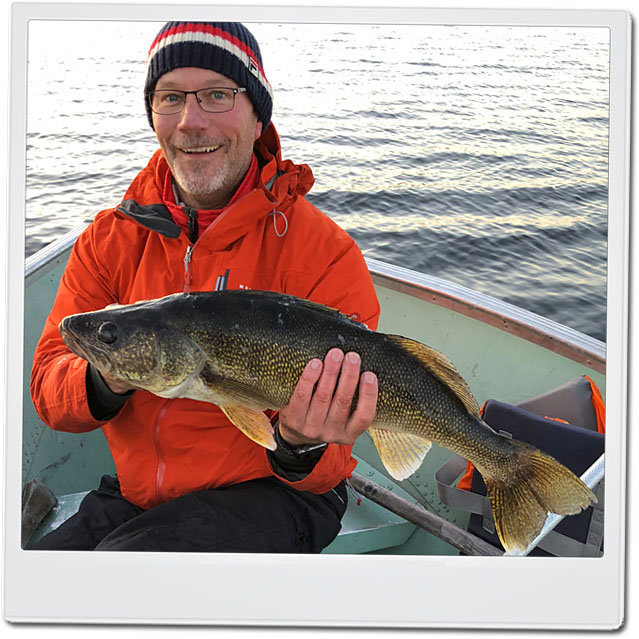 To find walleye, a bottom bouncer with a spinner dressed with live bait is always a good choice. Remember to keep your line as directly under the boat as possible to eliminate snags. Not all walleye rigs are equal. Color is important with yellow, chartreuse, and florescent orange as standard colors. However, we had great success with Mack's Smile Blades last year, and they out-produced any blade I have ever used. Once you locate the Walleye with this rig, just sit on top after marking your school and wait.
Around down timber and beaver huts, a floating jig dressed with live bait produces well. Don't throw your offering in the trees, but along side of the trees in the shadowed areas. Canyon Lake offers miles of down timber, so always use the shade to your advantage. The evening hours for fishing can be extended by fishing the north and west shoreline. Likewise, in the morning the south and east shoreline are shaded longer.
Slip bobber rigs are very productive around down timber, shoreline fishing over rocks, in front of beaver huts, and around current areas. We use this rig more and more every year. A minnow, leech or crawler will also do the trick.
We do have suspended Walleye in the deeper basins of the lake, and crank baits are effective in catching them. During the late summer months and fall we find Walleye suspended in 20 ft depths, and in spots as deep as 60 ft feeding on lake herring. I start out with a crank bait that will run as deep as 18 ft just over the Walleye. As the evening and darkness approach, the Walleye will come up to a shallow depth (ca. 10 ft.), so I change to a shallow running crank bait.
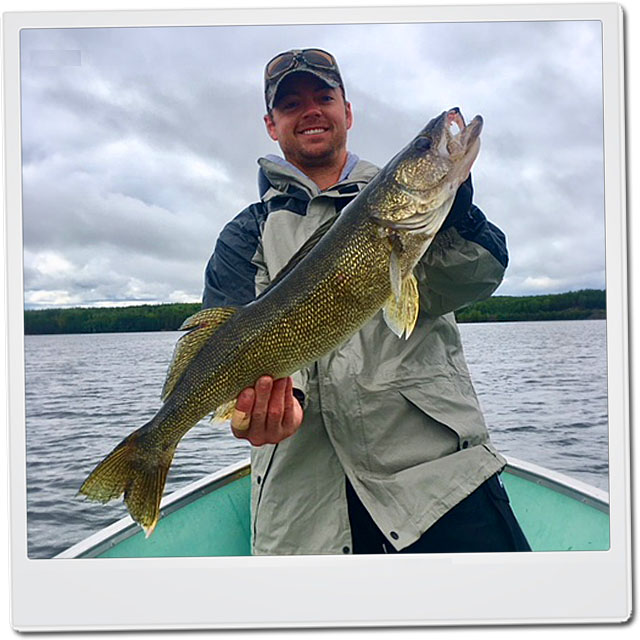
1. You can't catch fish from the cabin.To summarize, my rules for fishing are: don't expect to catch fish if you just want to sleep in; don't use a dead night crawler when you have a good one in your box; fish a spot well, and if it doesn't produce that doesn't mean you should not go back and fish it again with different sun light or a different time of day; if you spend time on the water, you have a much better chance to catch that dream fish!
2. Always use your best bait.
3. Fish a spot well
4. Hard work is rewarded.